What Defines a Leading Automotive BMS Company in China?
HANGZHOU, ZHEJIANG, CHINA, August 18, 2026 /EINPresswire.com/ -- On a typical vehicle calibration track, an engineer

Press Release Disclaimer: This is a press release distributed through the XPR Media network. It has not been independently verified by our newsroom.

HANGZHOU, ZHEJIANG, CHINA, August 18, 2026 /EINPresswire.com/ — On a typical vehicle calibration track, an engineer monitors real-time diagnostic feeds as a prototype electric vehicle navigates complex thermal and electrical stress tests. Beyond the visible mechanical dynamics, the true determinant of the vehicle’s long-term field reliability lies within its electronic brain. For a long time, standard discussions about battery architecture focused on elementary hardware specifications, such as the total number of voltage sampling channels or peak balancing currents. However, as localized sub-markets mature and field complexities grow, the criteria for industry leadership have evolved well beyond raw hardware components. Today, the sector is recognizing that engineering a truly dependable battery management system for electric vehicles requires a holistic operational infrastructure.
To understand what defines a Leading Automotive BMS Company in China, one must look at how an enterprise handles functional safety lifecycles, rigorous verification loops, and deep vehicle-level integration. Achieving leadership requires a structured transition from producing isolated components to delivering integrated control architectures that remain robust over hundreds of thousands of miles. Within this evolving industrial framework, Zhejiang Qualtech Co., Ltd. has established a development ecosystem that directly addresses these strict automotive requirements.
Founded in 2011 and recognized as a national high-tech enterprise, the company has grown into a “little giant” enterprise characterized by its specialized, refined, and innovative industrial contribution. With total electric vehicle BMS shipments exceeding 3 million sets, Qualtech provides an instructive operational model of how modern validation, software compliance, and closed-loop data accumulation define leadership in a highly competitive technical landscape.
Functional Safety and Process Compliance
The primary differentiator for any advanced automotive electronics provider is the thoroughness of its underlying engineering process. Modern automotive architectures cannot rely solely on end-of-line hardware testing; safety and reliability must be embedded directly into the initial product design phase. A true industry leader establishes a comprehensive safety culture that governs every stage of the product development lifecycle. This lifecycle demands adherence to stringent international frameworks, including ISO 26262 for functional safety, IATF 16949 for automotive quality management systems, and the Automotive Software Process Improvement and Capability Determination (ASPICE) framework for software engineering.
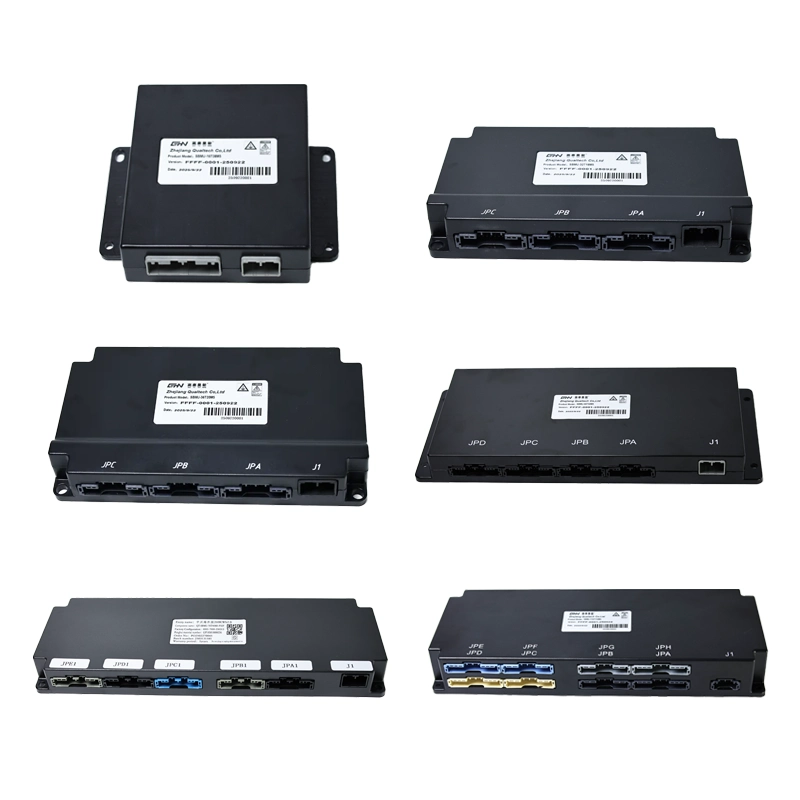
For Qualtech, this structured process compliance serves as the foundation for all hardware and software engineering. The company integrates design constraints targeting ASIL C and ASIL D functional safety levels directly into its product blueprints, ensuring that potential single-point and latent faults are systematically minimized. During the research and development phases of its automotive platforms, which include dedicated battery auxiliary technology management units (BATMU) and master control architectures, the engineering teams utilize advanced analytical methodologies. By applying rigorous Failure Mode and Effects Analysis (FMEA) alongside Fault Tree Analysis (FTA), the development teams isolate, predict, and mitigate potential operational risks before physical prototypes are manufactured. This systematic approach ensures that safety features are integrated directly into the foundational architecture of the control modules.
Field Validation and Failure Mode Data Accumulation
Theoretical safety models remain incomplete without real-world empirical validation. The transition from a specialized electronic design house to a prominent automotive component supplier is marked by the scale of active field deployment and the subsequent collection of performance data. When cumulative field experience spans millions of operational units, the resulting data loop creates a highly valuable asset: a comprehensive, real-world failure mode database.
Having deployed over 3 million BMS sets across diverse operating environments, Zhejiang Qualtech Co., Ltd. has built a vast repository of field telemetry and operational history. This real-world feedback allows engineers to identify long-term aging behaviors and complex thermal interactions that rarely surface in lab simulations. Rather than designing in isolation, the company works directly with OEMs through on-site calibration and joint validation — refining SOC, SOH, and SOP estimation algorithms with multi-scenario field data. This continuous feedback loop translates on-the-ground insights into software enhancements that prevent unexpected failures and optimize battery utilization over time.
This extensive field deployment is further validated by the company’s track record in large-scale energy storage projects, where the same BMS architecture is stress-tested under extreme conditions. In Jinta, Gansu, Qualtech delivered BMS and integrated system solutions for a 360 MWh energy storage project. The region sits on the edge of the Gobi Desert, characterized by arid conditions, intense solar radiation, and significant diurnal temperature swings that can exceed 30°C between daytime highs and nighttime lows. These conditions place simultaneous demands on multiple layers of the energy storage system: the thermal management design must handle repeated rapid heating and cooling cycles without allowing cell temperatures to drift outside the optimal operating window; the BMS control logic must maintain accurate state estimation despite ambient temperature fluctuations that challenge sensor calibration; and the electrical insulation system must contend with prolonged exposure to fine airborne particulates typical of desert-edge environments. Project delivery verified the BMS architecture’s ability to maintain stable operation under these combined thermal, electrical, and environmental stresses.
System-Level Integration and Full-Stack Architecture
A BMS cannot operate in isolation; it must function within the vehicle’s broader energy and communication ecosystem. As electrical architectures centralize, the BMS must seamlessly interact with the VCU, powertrain modules, and thermal networks via CAN interfaces. True leadership demands a system-level perspective — one that spans cell chemistry, pack thermal dynamics, and vehicle-level energy deployment.
Qualtech’s 4S+C architecture addresses this by integrating BMS, EMS, PCS, TMS, and cloud infrastructure on a unified platform. By managing the entire chain — from cell-level monitoring to the master controller — the company ensures its EV BMS functions in perfect harmony with the vehicle’s powertrain. This deep integration enables accurate thermal interpretation, dynamic voltage prediction under heavy acceleration, and real-time power coordination with the central control unit.
Advanced Manufacturing and Comprehensive Traceability
The final element of automotive qualification is manufacturing consistency. An excellent electronic design loses its value if the production line cannot replicate it with absolute precision across millions of units. The manufacturing environment for automotive-grade electronics requires high levels of automation, strict environmental controls, and absolute component-level traceability to meet the rigorous quality standards demanded by global vehicle manufacturers.
At its specialized production bases, Qualtech operates advanced, high-speed Surface Mount Technology (SMT) lines along with automated wave soldering and assembly systems. Every single circuit board undergoes multi-stage inspections, including Automated Optical Inspection (AOI) and industrial X-ray imaging, to confirm component alignment and solder joint integrity. This entire manufacturing ecosystem is managed by a centralized Manufacturing Execution System (MES). The MES tracks every component from its initial silicon wafer lot through assembly, thermal burn-in, and final functional end-of-line testing. Backed by key certifications including ISO 9001, IATF 16949, ISO 14001, and ISO 45001, this rigorous manufacturing framework guarantees that every control unit delivered to an automotive assembly line meets strict quality standards, providing complete traceability for every part in the field.
Establishing New Benchmarks for Automotive Control
Ultimately, leadership within the automotive component industry is defined by an unwavering commitment to engineering discipline and long-term reliability. True industry leaders distinguish themselves through an uncompromising adherence to functional safety protocols, continuous learning from real-world field data, a comprehensive system-level view of vehicle integration, and precision-engineered manufacturing processes.
By centering its corporate strategy on these precise criteria, Zhejiang Qualtech Co., Ltd. continues to advance the capabilities of modern battery management and control systems. Through a balanced combination of advanced research and development, field-tested algorithms, and certified manufacturing infrastructure, the company demonstrates the core operational values necessary to excel in the automotive sector.
For engineering teams and manufacturers seeking detailed product specifications, comprehensive hardware datasheets, or a thorough overview of automotive-grade development workflows, contact Qualtech’s engineering team to request a product brochure or schedule a technical consultation. Visit https://www.qualtechenergy.com/ for more information.
ZheJiang Qualtech Co.,Ltd.
ZheJiang Qualtech Co.,Ltd.
+ +86 15013692485
email us here
Visit us on social media:
LinkedIn
Facebook
TikTok
X
Legal Disclaimer:
EIN Presswire provides this news content “as is” without warranty of any kind. We do not accept any responsibility or liability
for the accuracy, content, images, videos, licenses, completeness, legality, or reliability of the information contained in this
article. If you have any complaints or copyright issues related to this article, kindly contact the author above.

Media gallery