Facial Serum Market Set to Reach USD 14.58 Billion by 2035 as Premium Skincare & Online Retail Accelerate Global Demand
Facial Serum Market is driven by rising skincare awareness, demand for targeted treatments, clean beauty, personalized

Press Release Disclaimer: This is a press release distributed through the XPR Media network. It has not been independently verified by our newsroom.
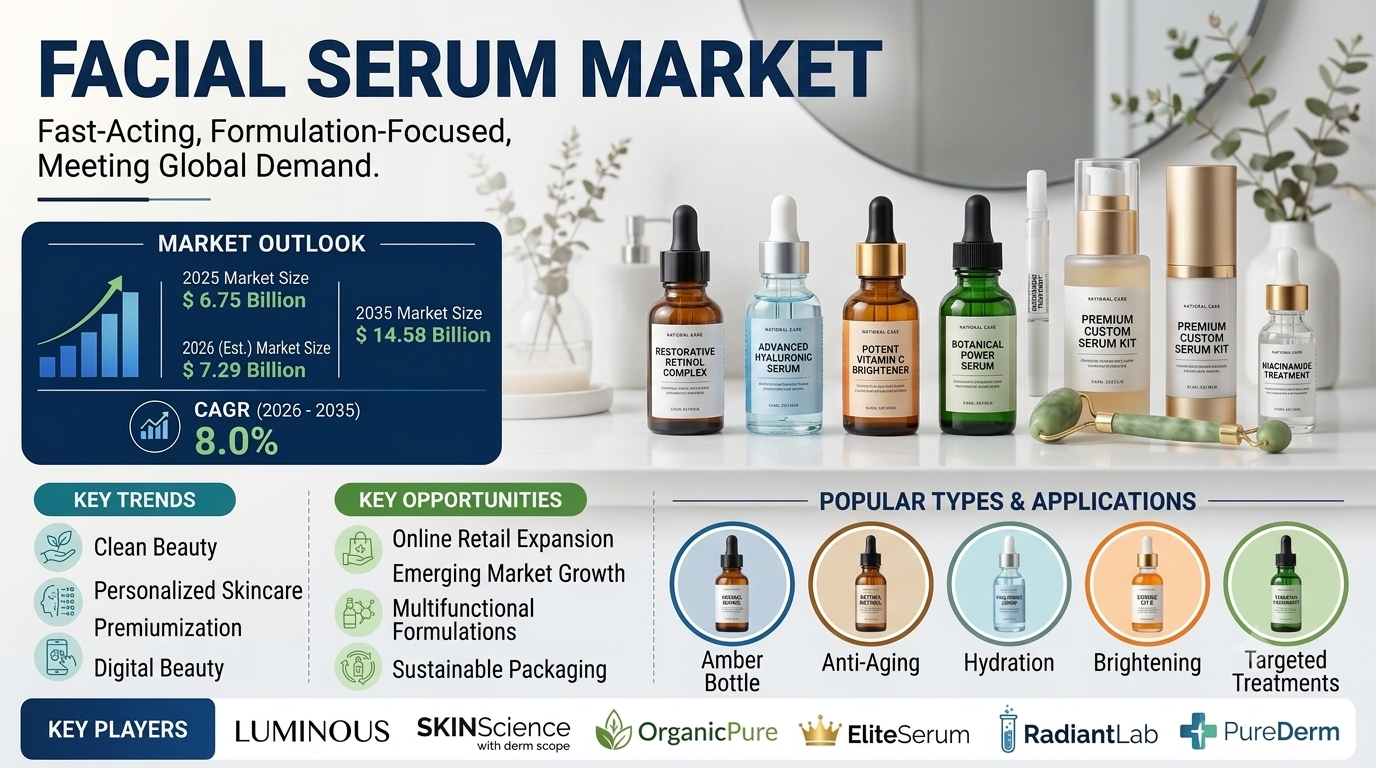

Facial Serum Market is driven by rising skincare awareness, demand for targeted treatments, clean beauty, personalized solutions & online retail expansion.
NEW YORK, NY, UNITED STATES, August 27, 2026 /EINPresswire.com/ — Facial Serum Market Overview:
The global Facial Serum Market Growth is entering a strong expansion phase as consumers increasingly view skincare as an essential component of personal wellness and daily self-care. Facial serums are gaining prominence because concentrated formulations are designed to address specific concerns, including hydration, visible aging, uneven skin tone, acne, pigmentation, and environmental stress. Increasing consumer awareness is encouraging brands to introduce targeted formulations with functional ingredients, improved textures, convenient application formats, and differentiated positioning. Clean beauty, personalization, and ingredient transparency are also influencing purchasing decisions across developed and emerging markets.
According to the market scope provided for this report, the global Facial Serum Market is estimated at USD 6.75 billion in 2025 and is expected to reach USD 7.29 billion in 2026. The industry is projected to expand to approximately USD 9.92 billion by 2030 and USD 14.58 billion by 2035, reflecting a CAGR of 8.0% during 2026–2035. The study covers 2021–2024 as the historical period, 2025 as the base year, and forecasts through 2035. It evaluates functionality, form, price point, distribution channel, and geography. Growth is supported by greater skincare knowledge, social media influence, online reviews, dermatology-led content, digital purchasing, and continuous formulation innovation. Manufacturers are increasingly investing in research and development to deliver specialized solutions aligned with evolving consumer expectations.
Competitive Landscape:
The Facial Serum Market features a diverse competitive environment comprising multinational beauty corporations, established skincare manufacturers, and specialized emerging brands. Companies compete through formulation innovation, brand reputation, product quality, distribution networks, pricing strategies, research capabilities, and digital marketing. Leading players benefit from extensive retail partnerships, strong research and development resources, broad geographic presence, and established customer loyalty, enabling them to introduce new products across multiple markets efficiently.
At the same time, smaller brands are gaining opportunities through niche positioning, clean beauty concepts, personalized skincare, innovative formulations, and strong social media engagement. Major industry participants include:
▪️L’Oréal
▪️Estée Lauder
▪️Procter & Gamble
▪️Unilever
▪️Shiseido
▪️Coty
▪️Beiersdorf
▪️Amway
▪️and Revlon
Future competitive strategies are expected to focus on portfolio expansion across mass, premium, and luxury categories, alongside targeted solutions for specific skin concerns. Digital-first launches, influencer collaborations, direct-to-consumer channels, personalized recommendations, and sustainable packaging are also likely to strengthen differentiation and customer engagement.
Consumer Focus Drives Growth:
The Facial Serum Market is benefiting from growing consumer awareness of proactive skin health and consistent skincare routines. Consumers increasingly prefer products that support long-term skin wellness rather than relying only on corrective treatments after visible concerns emerge. This shift is strengthening demand for serums focused on hydration, skin-barrier support, antioxidant protection, brightening, acne management, and signs of aging. Facial serums are particularly well positioned because they are commonly used between cleansing and moisturizing, allowing brands to develop targeted formulations for specific consumer requirements. Manufacturers can differentiate products based on age, skin type, lifestyle, climate, and individual skincare concerns. This targeted approach is encouraging broader product availability and helping brands address increasingly diverse consumer expectations.
The growing availability of skincare education is also influencing purchasing decisions. Consumers are increasingly examining ingredient lists, formulation claims, application instructions, and expected benefits instead of relying solely on brand recognition or packaging. This trend is encouraging manufacturers to improve ingredient transparency and communicate product functionality more effectively. Preventive skincare is further expanding the consumer base, particularly as younger consumers become interested in maintaining healthy-looking skin before visible aging concerns develop. Meanwhile, mature consumers continue seeking solutions for wrinkles, dryness, reduced elasticity, and uneven complexion. The combination of greater awareness, preventive habits, targeted formulations, and educational content is creating a strong foundation for continued demand and supporting innovation across the facial serum category.
Facial Serum Market Segmentation:
▪️By Functionality:
Anti-Ageing Serum: 32.7% share (2025)
Hydrating Serum: USD 1.86 Billion (2025)
Brightening/Lightening Serum: 7.6% CAGR
Acne-Fighting Serum: 8.9% CAGR
Others: USD 0.61 Billion (2025)
▪️By Form:
Water-Based: 56.0% share (2025)
Oil-Based: 9.4% CAGR
Others: USD 0.42 Billion (2025)
▪️By Price Point:
Mass: 64.5% share (2025)
Premium/Luxury: 9.7% CAGR
▪️By Distribution Channel:
Health & Beauty Stores: 33.9% share (2025)
Online Retail Stores: 9.8% CAGR
Hypermarkets/Supermarkets: USD 1.55 Billion (2025)
Others: 6.4% CAGR
Clean Beauty Reshapes Product Development:
Clean beauty has evolved from a niche positioning strategy into an important consideration in facial serum product development. Consumers are increasingly interested in formulations featuring recognizable ingredients, responsible sourcing, plant-derived components, antioxidants, vitamins, and simplified ingredient profiles. This shift is encouraging manufacturers to rethink formulation strategies while improving how products are presented and explained to consumers. The trend extends beyond naturally sourced ingredients, as buyers are becoming more informed about the differences between naturally derived and laboratory-developed components. As a result, brands are increasingly focusing on formulations that balance perceived safety, transparency, functionality, and reliable performance. Facial serum manufacturers can use these preferences to develop targeted products that align with changing expectations around skin wellness and responsible beauty.
Ingredient transparency is also becoming an important competitive factor, particularly across digital purchasing channels. Clear explanations of key ingredients, their functions, formulation benefits, and recommended usage can strengthen consumer confidence and support informed purchasing decisions. Educational content, ingredient guides, and product demonstrations are becoming increasingly valuable throughout the customer journey. Sustainability is further influencing product development, with brands exploring recyclable packaging, reduced material usage, refillable formats, responsible sourcing, and environmentally conscious production practices. These initiatives can help companies strengthen differentiation while responding to consumers who increasingly consider environmental and ethical factors alongside product effectiveness. Together, clean formulations, transparent communication, and sustainable practices are reshaping innovation and positioning within the facial serum category.
Get Full PDF Sample Copy of Report: (Including Full TOC, List of Tables & Figures, Chart) @
https://www.marketresearchfuture.com/sample_request/21924
Regional Outlook:
Geographic performance in the Facial Serum Market is influenced by purchasing power, skincare awareness, climate, retail infrastructure, cultural preferences, and access to international brands. The Middle East & Africa region is projected to be the fastest-growing geographic segment, registering an estimated CAGR of 9.3% during the forecast period. Rising demand for premium beauty products, expanding modern retail networks, increasing digital commerce adoption, and growing awareness of specialized skincare are supporting regional opportunities. Climate conditions across several Middle Eastern markets are also shaping skincare requirements, increasing interest in formulations designed for hydration, pigmentation, and environmental exposure. Premium and luxury positioning remains particularly relevant in markets where consumers demonstrate strong interest in high-end beauty and personal-care products. These factors are encouraging brands to introduce specialized offerings while strengthening digital and retail distribution strategies across the region.
North America remains an established market supported by strong skincare awareness, broad product availability, advanced retail infrastructure, and demand for specialized formulations. Clean beauty, ingredient-focused purchasing, and digital product discovery continue influencing consumer preferences. Europe represents another mature market, with sophisticated skincare routines and growing interest in natural, sustainable, and premium products. Meanwhile, Asia-Pacific offers significant opportunities due to the influence of K-beauty and J-beauty, expanding middle-class consumption, active digital beauty communities, and strong interest in innovative skincare formats. Local and international brands are increasingly adapting formulations, packaging, and marketing approaches to meet regional preferences. This geographic diversity enables manufacturers to pursue differentiated strategies across mature and emerging markets while responding to evolving consumer expectations and retail dynamics.
Key Opportunities:
The forecast period offers significant opportunities across manufacturers, retailers, ingredient suppliers, packaging companies, and digital commerce platforms. Premiumization is a key opportunity, with the Premium/Luxury segment projected to expand at a 9.7% CAGR. Brands can capture higher-value consumers through advanced formulations, specialized ingredients, premium packaging, and differentiated skincare experiences. Online commerce also presents strong potential, with Online Retail Stores expected to grow at a 9.8% CAGR. Digital platforms enable companies to combine sales with product education, personalized recommendations, new product launches, loyalty initiatives, and direct consumer engagement.
The Middle East & Africa region, projected to grow at a 9.3% CAGR, provides another attractive expansion opportunity. Companies that adapt formulations, packaging, product positioning, and distribution strategies to regional preferences can strengthen their presence. Personalization and multifunctional products are also creating opportunities as consumers increasingly seek targeted skincare solutions that fit simplified routines. Brands can differentiate through products addressing multiple concerns while maintaining credible performance and convenient application. Combining premium positioning, digital commerce, regional customization, personalization, and formulation innovation can help industry participants strengthen customer engagement and identify new revenue opportunities throughout the forecast period.
Online Retail Drives Distribution Growth:
Digital commerce is reshaping how facial serums are discovered, evaluated, and purchased. Online platforms provide consumers with broad product selections, convenient shopping, reviews, ingredient information, pricing comparisons, and educational resources, making them particularly valuable for skincare products that often require research before purchase. Online Retail Stores are projected to grow at a 9.8% CAGR, positioning digital distribution among the fastest-expanding channels in the Facial Serum Market. Social media is further strengthening this momentum through short-form videos, influencer recommendations, product demonstrations, user-generated content, and livestream shopping. These digital touchpoints can quickly increase awareness and encourage consumers to explore new formulations and brands.
E-commerce also enables emerging skincare companies to reach targeted audiences and expand into new geographic markets without relying entirely on extensive physical retail networks. Direct-to-consumer platforms and online marketplaces provide brands with opportunities to test products, collect consumer feedback, and build direct relationships with customers. However, increasing online competition can make product discoverability more challenging. Concerns surrounding counterfeit products, misleading claims, unreliable reviews, and excessive promotional activity may also influence consumer trust. Brands can address these challenges by maintaining authentic digital communication, providing accurate product information, strengthening customer support, and building credible online communities. A balanced digital strategy combining visibility, transparency, education, and customer engagement will remain important for long-term success.
Market Development Challenges:
The Facial Serum Market faces several challenges despite its positive growth outlook. Intense competition is making differentiation increasingly difficult as established brands and new entrants introduce specialized products through contract manufacturing, e-commerce, and social media channels. Regulatory compliance also remains important, requiring companies to meet requirements related to ingredient safety, labeling, packaging, product claims, and consumer protection. Increasingly informed consumers are more likely to scrutinize product information, making unsupported or exaggerated claims a potential reputational concern. Brands must therefore maintain transparency and ensure that product communication aligns with applicable standards.
Price sensitivity is another challenge, particularly across developing markets where consumers may prioritize affordable skincare options. Although premium and luxury products are gaining momentum, mass-market offerings continue to attract a broad customer base, requiring manufacturers to balance product performance, innovation, and affordability. Supply-chain complexity can further affect production costs and product availability, especially when companies depend on specialized ingredients, packaging components, or sustainable materials. Fluctuations in sourcing and production can create additional operational pressure. To address these challenges, companies may need stronger supplier networks, efficient production planning, transparent communication, competitive pricing strategies, and continuous product innovation to maintain consumer trust and market relevance.
Future Outlook:
The global Facial Serum Market is expected to maintain strong expansion through 2035 as skincare becomes increasingly personalized, ingredient-focused, performance-oriented, and digitally connected. The market is estimated at USD 6.75 billion in 2025 and is projected to reach USD 14.58 billion by 2035, representing an 8.0% CAGR from 2026 to 2035. Future growth will be influenced by changing consumer expectations, greater awareness of skincare ingredients, demand for targeted solutions, and continued innovation in formulations and delivery formats. Competition is also expected to move beyond traditional brand recognition as consumers increasingly assess efficacy, transparency, sustainability, personalization, sensory appeal, and purchasing convenience when selecting products.
Premium and luxury formulations are likely to capture greater value as consumers show stronger interest in specialized skincare experiences, while online retail will continue transforming product discovery and purchasing behavior. The Middle East & Africa region is expected to provide significant expansion opportunities, whereas North America and Europe will remain important markets for premium products and innovation. Companies that combine science-backed formulations with transparent communication, sustainable sourcing, digital engagement, and consumer-focused development will be better positioned for long-term success. Overall, the next phase of the Facial Serum Market is expected to be shaped by personalization, premiumization, digital commerce, formulation innovation, and increasingly informed purchasing decisions.
FAQs?
What is the projected size of the Facial Serum Market by 2035?
The global Facial Serum Market is projected to reach USD 14.58 billion by 2035, according to the provided market forecast.
What CAGR is expected for the Facial Serum Market?
The market is expected to register an 8.0% CAGR between 2026 and 2035, indicating sustained expansion throughout the forecast period.
Which Facial Serum Market segment is expected to grow fastest?
The Online Retail Stores segment is projected to record the fastest growth among the specified distribution channels at 9.8% CAGR, while the Premium/Luxury price segment is expected to grow at 9.7%.
Which region is projected to grow fastest?
The Middle East & Africa is identified as the fastest-growing regional segment, with an estimated 9.3% CAGR during the forecast period.
Discover More Research Reports By Market Research Future:
Facial Mask Maker Market:
https://www.marketresearchfuture.com/reports/facial-mask-maker-market-33293
Facial Care Product Market:
https://www.marketresearchfuture.com/reports/facial-care-product-market-41528
Facial Massage Cream Market:
https://www.marketresearchfuture.com/reports/facial-massage-cream-market-21357
Cosmetics Perfumery Glass Bottle Market:
https://www.marketresearchfuture.com/reports/cosmetics-perfumery-glass-bottle-market-36639
Cosmetic Pencil Pen Market:
https://www.marketresearchfuture.com/reports/cosmetic-pencil-pen-market-36636
Market Research Future
Market Research Future
+1 855-661-4441
email us here
Legal Disclaimer:
EIN Presswire provides this news content “as is” without warranty of any kind. We do not accept any responsibility or liability
for the accuracy, content, images, videos, licenses, completeness, legality, or reliability of the information contained in this
article. If you have any complaints or copyright issues related to this article, kindly contact the author above.

Media gallery