Enhancing Electronic Testing Accuracy with PFPE Heat Transfer Fluids
CHENGDU, SICHUAN, CHINA, September 1, 2026 /EINPresswire.com/ -- As electronic components continue to shrink while

Press Release Disclaimer: This is a press release distributed through the XPR Media network. It has not been independently verified by our newsroom.
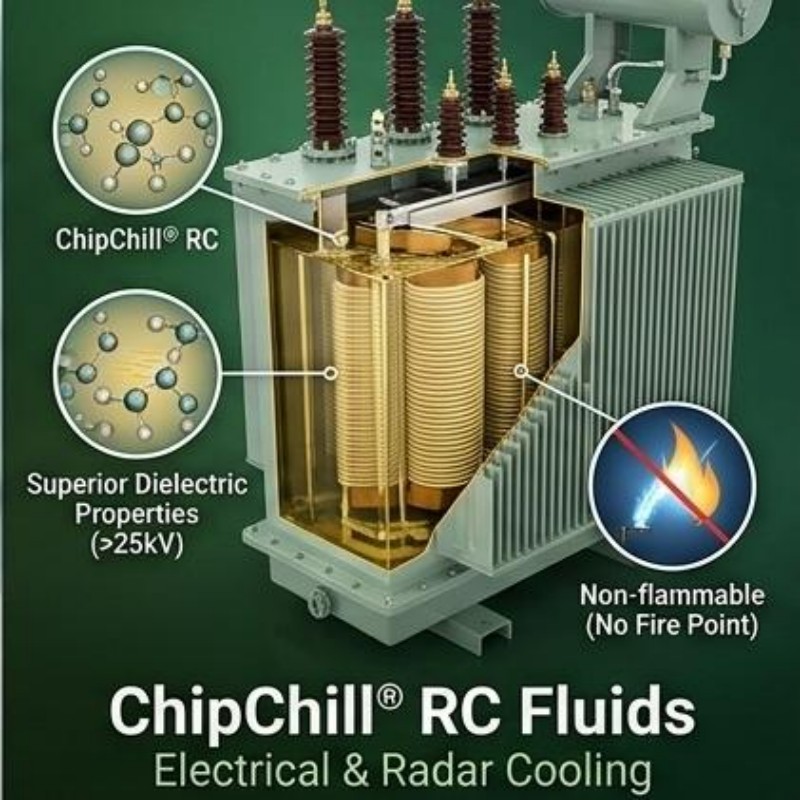

CHENGDU, SICHUAN, CHINA, September 1, 2026 /EINPresswire.com/ — As electronic components continue to shrink while power densities exponentially increase, accurately verifying their thermal performance during the manufacturing process requires highly specialized testing environments. Sichuan Kingrande New Materials Co., Ltd. delivers this precision through its advanced ChipChill technology. Operating as a specialized chemical manufacturer, the company supplies ultra-pure PFPE Heat Transfer Fluids specifically engineered for direct immersion cooling and rigorous electronic testing protocols. Supported by a robust manufacturing facility in Suining and over 300 technical professionals, the company strictly adheres to IATF16949:2016 and ISO9001:2015 quality systems. This certified manufacturing scale ensures that semiconductor fabs, avionics manufacturers, and data center operators receive highly consistent, non-flammable dielectric fluids capable of safely dissipating massive thermal loads while preventing electrical short circuits during critical component validation.
High-Density Packaging Requires Highly Conductive Dielectric Cooling
The relentless drive toward miniaturization in modern semiconductor design means that high-performance microprocessors, IGBT power modules, and advanced memory architectures generate intense, highly localized heat. During critical burn-in testing and quality validation, failing to rapidly remove this thermal energy leads to immediate component degradation, invalidating the test data and destroying expensive hardware.
FSE engineers its ChipChill PFPE fluids to provide exceptionally efficient thermal management in these extreme density environments. Because these perfluoropolyether fluids possess excellent thermal conductivity and low kinematic viscosity, they rapidly circulate through complex heat sinks and highly condensed circuit board architectures. They actively pull heat away from critical junctions much faster than forced air systems.
Crucially, because these PFPE fluids are completely dielectric, electronic components can be fully immersed in the liquid while actively powered. This direct-contact cooling method eliminates the thermal resistance associated with air gaps and solid interface materials, allowing test engineers to accurately push high-density chips to their absolute thermal limits without inducing heat-related failures.
Non-Flammable Properties Secure High-Voltage Test Environments
Testing high-voltage power electronics, electric vehicle (EV) battery management systems, and industrial inverters introduces a significant risk of electrical arcing and catastrophic fire. Conventional hydrocarbon-based cooling fluids and synthetic oils present an unacceptable safety hazard when exposed to high-voltage transients or unexpected short circuits during the testing phase.
The ChipChill PFPE fluid portfolio completely eliminates this fire risk due to its fully fluorinated molecular structure. Lacking any carbon-hydrogen bonds, the fluid is fundamentally non-flammable; it possesses no flash point, no fire point, and will not support combustion even when exposed to a direct electrical arc or an open flame.
By specifying these completely non-flammable dielectric fluids, facility managers and test engineers ensure absolute safety within high-voltage laboratories. This inherent safety characteristic allows for the aggressive, high-power testing of critical electrical architectures without the need for complex, expensive fire suppression systems or the constant threat of catastrophic facility damage.
Broad Operating Temperatures Enable Aggressive Thermal Shock Testing
Military avionics, automotive sensors, and satellite communications equipment must survive extreme environmental fluctuations throughout their operational lifespans. Validating this durability requires subjecting the components to severe thermal shock testing, rapidly cycling the hardware from sub-zero freezing conditions to extreme high temperatures in a matter of seconds.
Conventional testing fluids often freeze at low temperatures or rapidly vaporize when heated, making them unsuitable for dynamic thermal cycling. Advanced PFPE heat transfer fluids overcome this limitation by remaining completely liquid across an extraordinarily broad temperature range. They maintain a stable, pourable viscosity at temperatures well below -70°C and resist boiling or outgassing at temperatures exceeding 250°C.
This massive operational liquid range allows test engineers to utilize a single fluid for the entire thermal shock profile. Components can be rapidly plunged between hot and cold fluid baths, ensuring accurate, highly repeatable validation of solder joint integrity, packaging reliability, and overall component survival under severe environmental stress.
Purity Standards Prevent Contamination During Immersion
When highly sensitive semiconductor wafers, optical sensors, or bare printed circuit boards are directly immersed in a testing fluid, any trace impurities within the liquid will rapidly contaminate the hardware. Dissolved moisture, ionic contaminants, or microscopic particulates left behind after the fluid evaporates will cause long-term corrosion, electrical leakage, and ultimate component failure in the field.
Operating with over two decades of specialized chemical synthesis expertise since its founding in 2004, the enterprise employs rigorous, clean-room compatible manufacturing protocols. The Suining facility utilizes advanced multi-stage filtration and high-vacuum degassing to ensure that every batch of ChipChill fluid meets the industry’s most stringent purity specifications, minimizing non-volatile residues and eliminating trace ionic contaminants.
This unwavering commitment to absolute fluid purity is validated through comprehensive IATF16949:2016, ISO9001:2015, and ISO14001:2015 SGS certifications. For quality assurance teams and electronics manufacturers, these accreditations provide the documented proof that the immersion fluid will not deposit yield-killing residues, allowing components to proceed directly from testing to final packaging without requiring aggressive post-test cleaning processes.
Strategic Fluid Sourcing Stabilizes Production Economics
While high-performance PFPE fluids represent a premium technical capability, their long-term economic viability depends on fluid stability and reliable supply. Because these fluids are chemically inert and do not break down, oxidize, or degrade during normal testing operations, they can be continuously filtered and reused for extended periods, drastically lowering the overall cost of ownership.
By sourcing directly from a primary, scaled manufacturer, electronics testing facilities secure a reliable, global supply chain free from the disruptions and massive markups associated with third-party distributors. The manufacturer’s dedicated technical support team actively assists facilities in optimizing their fluid handling, filtration, and recovery systems to maximize fluid lifespan and minimize evaporative losses.
Aligned with the corporate mission, “Fluorine & Silicone, for a Better Life,” the organization provides test engineers with verified thermodynamic data and expert material guidance. Quality assurance managers and thermal design engineers seeking to optimize their immersion testing capabilities can access specific Technical Data Sheets (TDS) and initiate technical evaluations directly through https://www.cgfse.com/.
Chenguang Fluoro & Silicone Elastomers Co., Ltd.
FSE
email us here
Visit us on social media:
LinkedIn
Instagram
Facebook
YouTube
TikTok
X
Legal Disclaimer:
EIN Presswire provides this news content “as is” without warranty of any kind. We do not accept any responsibility or liability
for the accuracy, content, images, videos, licenses, completeness, legality, or reliability of the information contained in this
article. If you have any complaints or copyright issues related to this article, kindly contact the author above.

Media gallery