Malecha’s Auto Body Explains Repair vs. Replacement Decisions After a Collision
Faribault, MN - September 16, 2026 - PRESSADVANTAGE - Malecha's Auto Body has published new consumer guidance

Press Release Disclaimer: This is a press release distributed through the XPR Media network. It has not been independently verified by our newsroom.

Faribault, MN – September 16, 2026 – PRESSADVANTAGE –
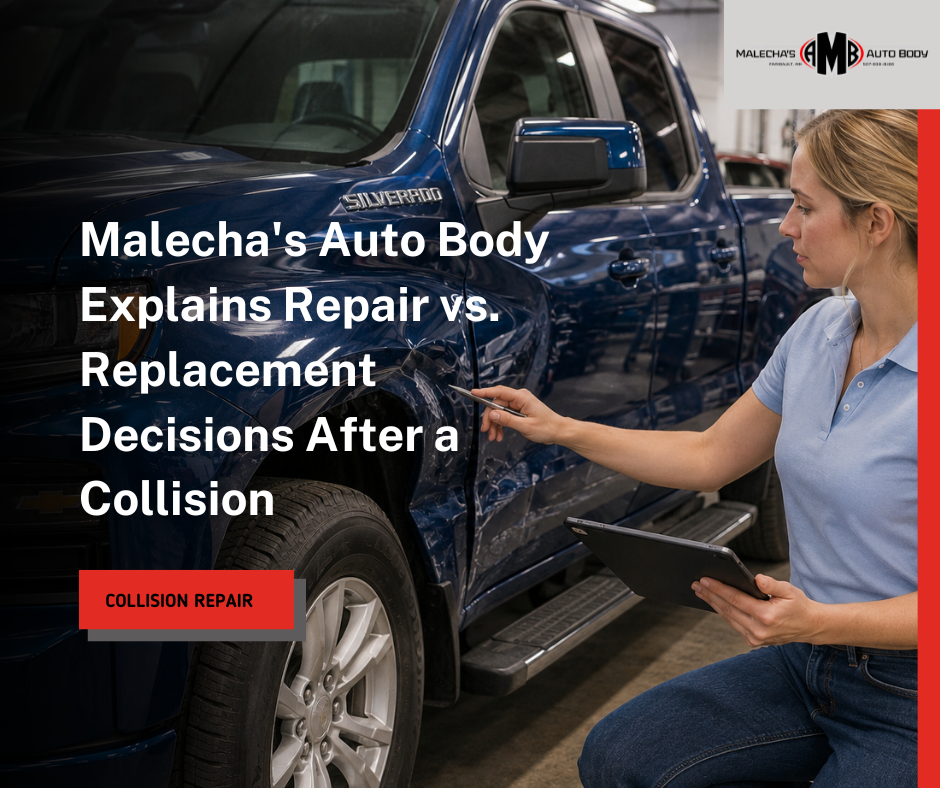
Malecha’s Auto Body has published new consumer guidance explaining how collision repair professionals evaluate whether a damaged vehicle component may be repaired or requires replacement. The September resource focuses on several factors that can influence the decision, including the component’s condition, material and construction, location of the damage, accessibility, and applicable manufacturer repair information.
The new guidance adds a repair-versus-replacement framework to Malecha’s Auto Body’s existing consumer repair information. Rather than establishing a universal rule based on the visible size of a dent or damaged area, the resource explains why each affected component can require an individual evaluation.
Modern collision repairs can involve exterior panels, bumper components, brackets, reinforcements, trim, mounting areas, and other parts constructed from different materials and designed for different purposes. As a result, two components with similar-looking exterior damage do not necessarily receive the same repair recommendation.
One consideration is the documented condition of the affected component. Collision damage can involve dents, deformation, cracks, tears, displaced areas, damaged mounting locations, or combinations of these conditions. The extent and characteristics of the damage provide information technicians can use when developing the repair plan.
Malecha’s Auto Body’s Collision Repair information provides additional context about how damaged areas are evaluated and incorporated into the broader repair process.
Material and construction can also influence the evaluation. Contemporary vehicles can incorporate conventional steel, high-strength steel, aluminum, plastics, composites, and other materials. Different components can also use specific attachment methods, reinforcements, adhesives, fasteners, or joining techniques.
Because of these differences, a repair procedure appropriate for one component cannot automatically be assumed appropriate for another. A steel exterior panel, aluminum component, or plastic bumper cover can each present different considerations even when the visible damage appears comparable.
The location of the damage is another part of the evaluation. Damage within an open section of a panel can present different considerations from damage involving an edge, body line, mounting location, attachment point, reinforcement, or another formed area. Technicians can consider the location together with the material condition, deformation, accessibility, and other documented characteristics.
This component-specific approach helps explain why visible damage size alone does not establish whether repair or replacement is appropriate. A relatively small damaged area can involve a location with particular construction or technical requirements, while another component with more visible deformation may present a different set of repair considerations.
Accessibility can provide additional information during repair planning. When a vehicle is initially evaluated, installed trim, lamps, bumper covers, panels, or adjacent components may prevent technicians from examining every area associated with an impact.
Appropriate removal of affected components during repair planning can provide access to mounting locations, brackets, reinforcements, fasteners, and adjoining areas that were previously covered. Their actual condition can then be documented and considered when determining the applicable repair operation.
Additional access does not mean more damage will necessarily be identified. Instead, it allows technicians to evaluate areas that could not reasonably be examined during the initial exterior assessment.
The September guidance also addresses the role of manufacturer repair information. Vehicle manufacturers can publish technical procedures addressing component repairability, replacement requirements, joining methods, attachment locations, corrosion protection, measurements, and other operations associated with specific vehicles and components.
Malecha’s Auto Body maintains manufacturer-focused repair information through its OEM Certification programs. The company’s collision repair information also states that its repair process can include panel replacement or sectioning following OEM repair information.
Manufacturer research is particularly relevant because procedures applicable to one vehicle cannot automatically be transferred to another make, model, model year, or component. Identifying the vehicle and affected component helps technicians determine which technical information applies to the repair being considered.
The guidance does not present OEM certification itself as the factor that decides whether a component should be repaired or replaced. Instead, vehicle-specific repair information is one part of evaluating the documented damage and determining which operations are applicable.
Repair and replacement are also presented as different repair operations rather than competing measures of quality. Replacing a component is not automatically preferable simply because a new part is installed, while retaining and repairing an existing component is not automatically the appropriate choice.
A repair plan can include both approaches. One component may be suitable for repair based on its condition and applicable procedures, while another affected component may require replacement because its damage, construction, location, or manufacturer information leads to a different operation.
Malecha’s Auto Body has previously published consumer information explaining differences among OEM, aftermarket, and recycled replacement parts. That information similarly notes that parts decisions can depend on the vehicle, type of damage, manufacturer recommendations, insurance coverage, and availability rather than a single rule. The new September guidance addresses an earlier question in repair planning: determining whether replacement is required in the first place.
The publication also distinguishes technical repair decisions from insurance administration. Insurance coverage, parts availability, deductibles, and claim procedures can affect how a repair progresses, but those considerations are separate from evaluating the physical condition of a damaged component and determining which technical procedures apply.
When a repair plan changes because additional documented information becomes available, updated information can also become part of the supplement process when an insurance claim is involved. Malecha’s Auto Body’s existing collision repair information notes that supplements are managed as part of its repair and claim process.
For vehicle owners, the September guidance organizes the repair-versus-replacement decision around a practical sequence: identifying the affected component, documenting its condition, understanding its construction and damage location, evaluating accessible and previously covered areas when appropriate, and researching applicable manufacturer information.
This framework is intended to provide consumers with a clearer explanation of why repair recommendations can differ even when two damaged areas initially appear similar.
Additional information about exterior component restoration is available through Malecha’s Auto Body’s Auto Body Repair resource.
The September guidance is educational and does not establish whether a particular component should be repaired or replaced without an individual vehicle evaluation. Its central point is that the decision develops from the documented condition and construction of the affected component together with applicable technical information, rather than exterior appearance alone.
About Malecha’s Auto Body
Malecha’s Auto Body serves vehicle owners in southern Minnesota through its Faribault and Waseca locations. The company provides collision repair, auto body repair, paintless dent repair, repair planning, OEM-certified repair capabilities, and related vehicle restoration services.
###
For more information about Malecha’s Auto Body, Faribault, contact the company here:
Malecha’s Auto Body, Faribault
William Malecha
+1 507-838-8166
WilliamMalecha@gmail.com
190 20th St NW, Faribault, MN 55021